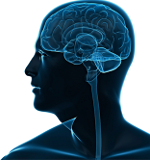
Recent literature has highlighted the prevalence of dysfunctions in vision following traumatic brain injuries of all levels of severity (including concussion.) Research published by the Veterans Administration (VA) in 2012 indicates that the percentage of TBI victims with vision problems could be as high as 60%. They explain that this prevalence is not surprising, since over 50% of the brain is involved in visual processing. Alvarez et. al. explain how visual and other symptoms occur when the brain is subjected to “acceleration/deceleration” forces: Read More
I travel between two worlds that may appear far apart – by day I am a trial lawyer with a focus on traumatic brain injury; nights and weekends I am a yoga teacher. I increasingly find that these worlds are very close together.
As a brain injury lawyer I work with people struggling to recover from the loss of sense of self so often caused by brain injury as well as associated depression and chronic pain. Many of my clients have reported meaningful increases in the quality of their lives following injury through “mindfulness” practices such as yoga and meditation. Practices such as yoga are designed to increase awareness of the present moment, to increase awareness of our thoughts, emotions and physical sensations without filtering them through past experience or fears of the future – to recapture our sense of ourselves. Read More
In a study published November 18, 2013 in Frontiers in Neurology, researchers from Penn and Baylor report that they have identified a blood biomarker – SNTF – that if found on the day of injury predicts with substantial accuracy both cognitive impairment persisting more than 3 months and the existence of abnormal brain imaging finding in the corpus callosum and uncinate fasciculus of the brain (using diffusion tensor imaging (DTI). Read More
There has been much debate over what happens to the brain following a concussion, much of it recently focused on concussions in sports. One side of the debate maintains that concussions, also referred to as “mild traumatic brain injuries,” involve only a very short term disruption of brain function with no damage to the brain. As discussed in previous posts, this view has been discounted by a growing body of research involving advanced imaging technologies as well as post-mortem pathological studies showing that in a minority of cases concussions can cause lasting damage to the brain as well as persistent symptoms.
One of the causes of the failure of clinical trials to successfully treat TBI, the authors contend, is the common classification of TBIs as “mild, moderate or severe.” These classifications do not incorporate newer insights and findings from diagnostic tools such as imaging and biomarkers and therefore do not promote “mechanistic targeting” for clinical trials. The authors support the transition to a more nuanced approach, a precise disease classification model that is based on the precise pathoanatomical and molecular features of the injury. Read More
Defense attorneys often cite “meta-analytic” reviews of neurological studies to make the argument that “mild” traumatic brain injuries (mTBIs) cause no lasting effect beyond three months post-injury. A “meta-analysis” involves a statistical study of multiple studies published in the literature.
Meta-analyses in mTBI are often used to show that persistent symptoms are “neurotic” rather than “organic”
Fortunately, it is generally agreed that the majority of people who suffer mTBIs, sometimes referred to as “concussions”, report full recovery from symptoms within three months of the injury – in fact many recover much faster. A great deal of research over the past few years has focused on the minority of people who do not fully recover within three months, described as having a “persistent post-concussion symptoms (PCS).” These patients are sometimes referred to as the “miserable minority.” The “meta-analyses” are often cited as demonstrating that changes in performance after three months have “limited statistical and clinical significance;” in other words, that persistent symptoms must be psychological or “neurotic” rather than “organic” or neurologic. Read More
Two recent peer reviewed papers support the position statement adopted by the Brain Injury Association in 2009 that “Brain Injury” be treated not as static event from which patients gradually recover over time, but as the beginning of a disease process that that can cause symptoms that change over time, in some cases getting worse instead of better, and that can impact multiple organ systems.
The good news is that most people do, in fact, recover. For those who do not, however, the disease model is more consistent with the evolving research. As McCrea, Iverson, McAllister, et. al. noted in their 2009 Integrated Review of Recovery after Mild Traumatic Brain Injury, brain injury science has advanced more in the last few years than in the previous 50, causing us to change the paradigms we have used to understand both the injury and its consequences. Read More
A recent study published in Neurology found a link between traumatic brain injuries (TBI) and ischemic strokes. Ischemic strokes, a category which accounts for 87 percent of all stroke cases as per the American Stroke Association, are those which are caused by blood clots or other obstructions in the blood vessels which connect to the brain. Read More
Concussion, or mild traumatic brain injury (TBI), typically produces no gross pathology, such as hemorrhage or abnormalities, that can be seen on conventional CT scans of the brain. It does cause rapid-onset neurophysiological and neurological dysfunction that in most patients resolves spontaneously over a fairly short period of time. Studies have shown, however, that approximately 15% of individuals with mild TBI develop persistent cognitive dysfunction and other symptoms. Researchers are starting to make progress on proving mild traumatic brain injury using the biomarkers that underlie such symptoms. Read More